Homer Sykes produced some of the most iconic documentary photographs of the Blitz Club scene in London around 1980. His images captured the “Blitz Kids” at the precise moment the New Romantic movement was evolving from a small underground subculture into one of the defining visual and musical styles of the 1980s. Unlike polished fashion photographers working in studios or magazines, Sykes approached the Blitz as a documentary photographer, giving his work an immediate, intimate, and observational quality. His photographs are filled with crowded dancefloors, dramatic makeup, military-inspired tailoring, theatrical poses, gender-fluid styling, and the experimental energy of London’s art-school culture. Rather than simply recording outfits, Sykes documented how young people used fashion and performance to reinvent themselves and escape the restrictions of everyday life.
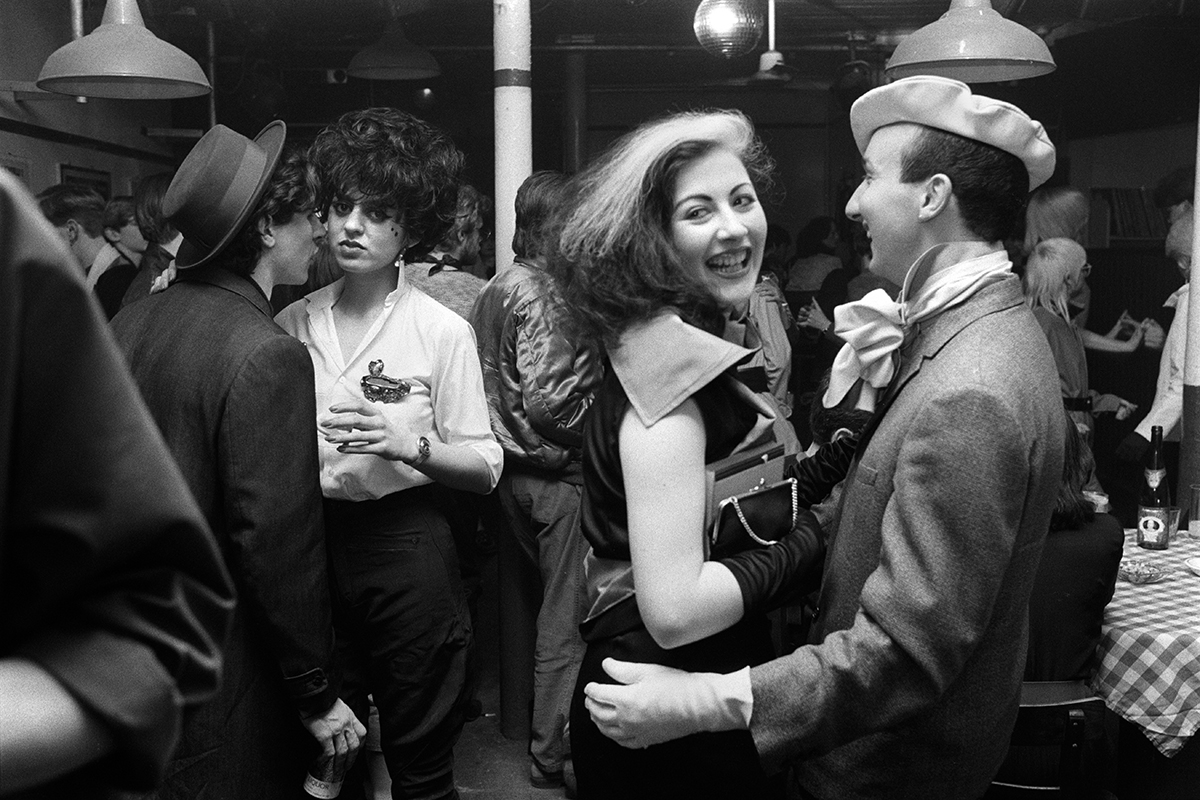
Stephen Jones the milliner dancing with Jayne Chilkes. He is wearing "... my father’s suit, but he certainly didn’t wear it with cream gloves, a cream beret and a pussy cat bow" (c) Homer Sykes
One of the most striking aspects of Sykes’ Blitz photographs is how raw and handmade the scene still appears. Later representations of the New Romantic movement often became glossy, commercialised, and heavily tied to the fashion industry, but Sykes captured the culture before that transformation. His photographs preserve the atmosphere of Blitz when it was still a relatively small weekly gathering fuelled by creativity, fantasy, and self-expression rather than celebrity. Many of the clothes worn by club-goers were handmade or adapted from vintage military uniforms, historical costume, Hollywood glamour, science fiction, cabaret, and Bowie-inspired androgyny. The photographs reveal a generation treating nightlife itself as a form of performance art.
Sykes’ Blitz and Heaven photographs sit naturally alongside his wider body of documentary work, which often explores British subcultures, public rituals, and the ways people communicate identity through clothing and appearance. His work captures not only the fashion of the era, but also the social atmosphere surrounding it: the anticipation outside clubs, the theatricality of entering exclusive spaces, and the sense that nightlife could become a stage for reinvention.
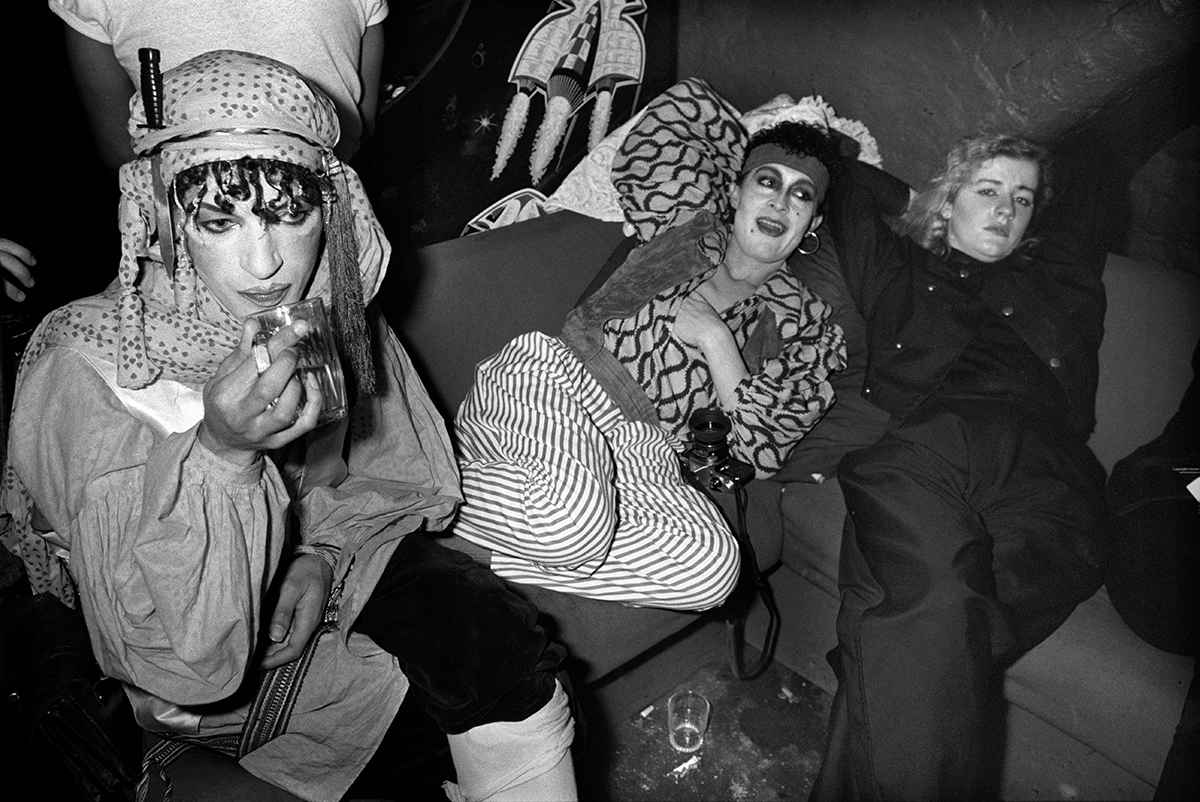
New Romantics at Heaven Nightclub, 1980 (c) Homer Sykes
The Blitz Club itself became the symbolic birthplace of the Blitz Kids and the wider New Romantic movement. Located in Covent Garden and run by Steve Strange, front man of the band Visage, alongside DJ Rusty Egan, the club quickly developed a reputation for exclusivity and extravagant style. Before Blitz, Strange and Egan had organised Bowie and Roxy Music-inspired nights at Billy’s in Soho, attracting young creatives interested in fashion, music, and experimentation. Blitz refined that atmosphere into something even more stylised and theatrical. Entry to the club depended heavily on appearance, originality, and attitude. Steve Strange famously turned people away at the door (including Mick Jagger) if they failed to meet the club’s aesthetic standards, reinforcing the idea that identity itself could be curated as performance.
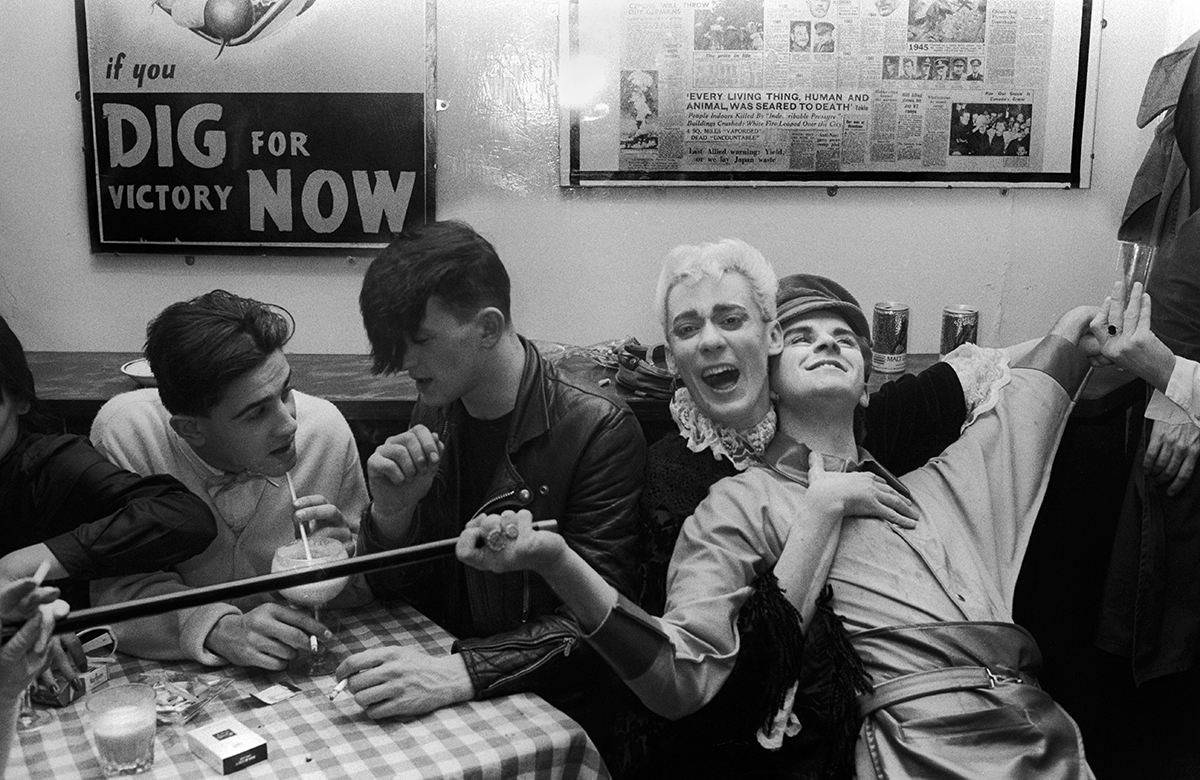
The Blitz Club: (L-R) Christos Tolera, Barry (The Rat) Bryan, Stephen Linard, Steve Strange. (c) Homer Sykes
Steve Strange’s own background added another layer to the mythology of the scene. Born in Newbridge in Caerphilly and raised partly in Rhyl and Porthcawl, he moved to London at the age of fifteen and immersed himself in the city’s emerging punk and post-punk culture. Bringing a distinctly Welsh sense of drama and creativity, Strange became one of the defining figures of the era. Alongside Rusty Egan’s electronic and European-influenced DJ sets, Blitz created an environment that blended glamour, futurism, nostalgia, and escapism.
The Blitz scene centred on radical self-invention. Historical and futuristic fashion mixed freely with synth-driven electronic music, gender-fluid presentation, romanticism, and theatrical excess. For many young people, Blitz offered an escape from the bleak social and economic realities of late-1970s Britain, which was marked by unemployment, urban decline, strikes, and political tension. While punk had expressed anger and confrontation, the New Romantics responded with fantasy, elegance, and transformation. The club became a place where identity could be entirely reconstructed through clothing, makeup, music, and performance.
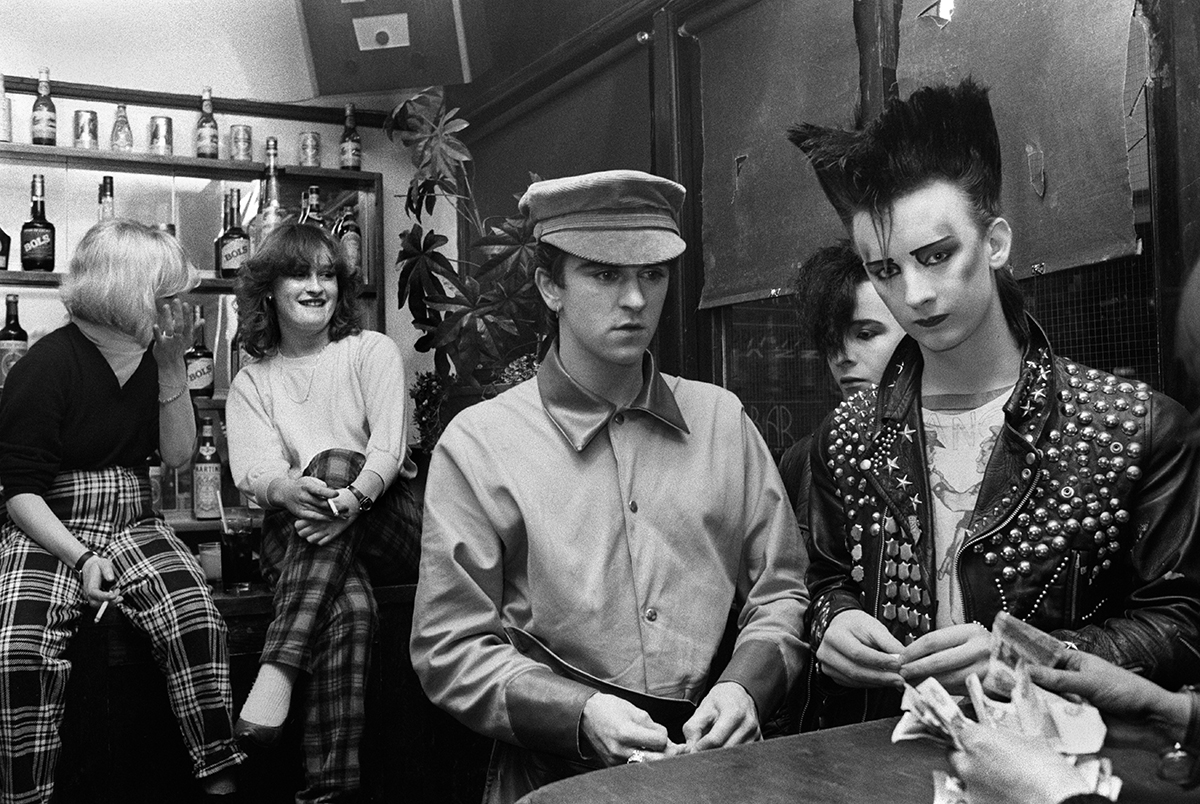
The Blitz Club: Steve Strange, Boy George and friend Wilf Rogers.(behind George) The end of the evening, counting out money. (c) Homer Sykes
The “Blitz Kids” included future stars and influential creatives such as Boy George, members of Spandau Ballet and Visage, milliner Stephen Jones, and stylist Princess Julia. Many individuals who passed through Blitz would later shape music, fashion, styling, magazine culture, and nightlife throughout the 1980s. The movement also influenced mainstream visual culture, especially in music videos, magazine editorials, and the rise of synth-pop aesthetics.
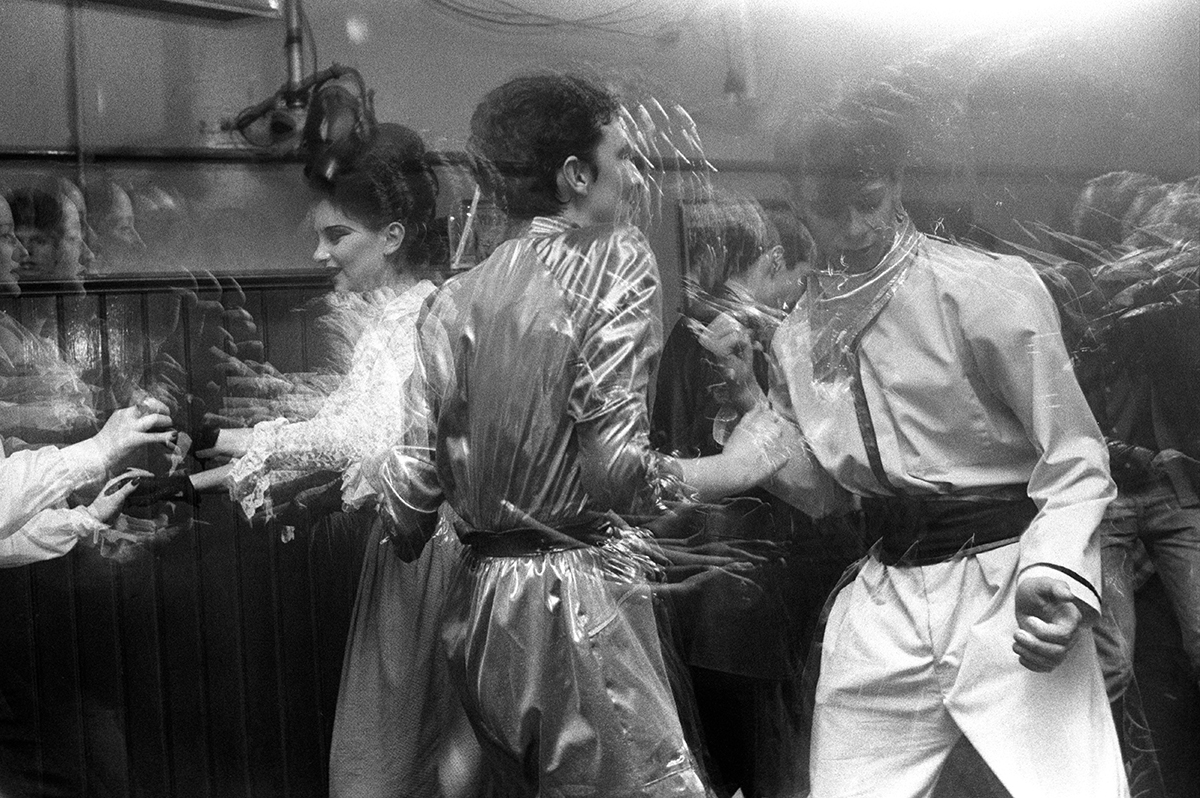
Blitz Kids New Romantics Julia Fodor Princess Julia with Blitz Club Space Cadets dancing the night away (c) Homer Sykes
Although Heaven is often associated with the same period, its relationship to the Blitz Kids and the New Romantic movement was more indirect than central. What linked Heaven to that world was the broader overlap between queer nightlife, avant-garde fashion, synth-pop music, and experimental club culture in late-1970s and early-1980s London. Many artists, musicians, performers, and club-goers moved fluidly between venues such as Blitz, Heaven, The Embassy, Billy’s, and later clubs like Taboo and Batcave. Together, these spaces formed an interconnected creative ecosystem where music, sexuality, fashion, and performance continuously influenced one another.
Heaven opened in 1979 beneath the arches of Charing Cross station and quickly became one of Britain’s first major gay superclubs at a time when many queer venues were still hidden, underground, or marginalised. Unlike Blitz, which focused heavily on exclusivity and visual theatricality, Heaven became known for its scale, openness, and importance within LGBTQ+ nightlife. It helped bring queer club culture further into the mainstream and later became hugely influential in the development of house music, rave culture, techno, and commercial dance music in Britain.
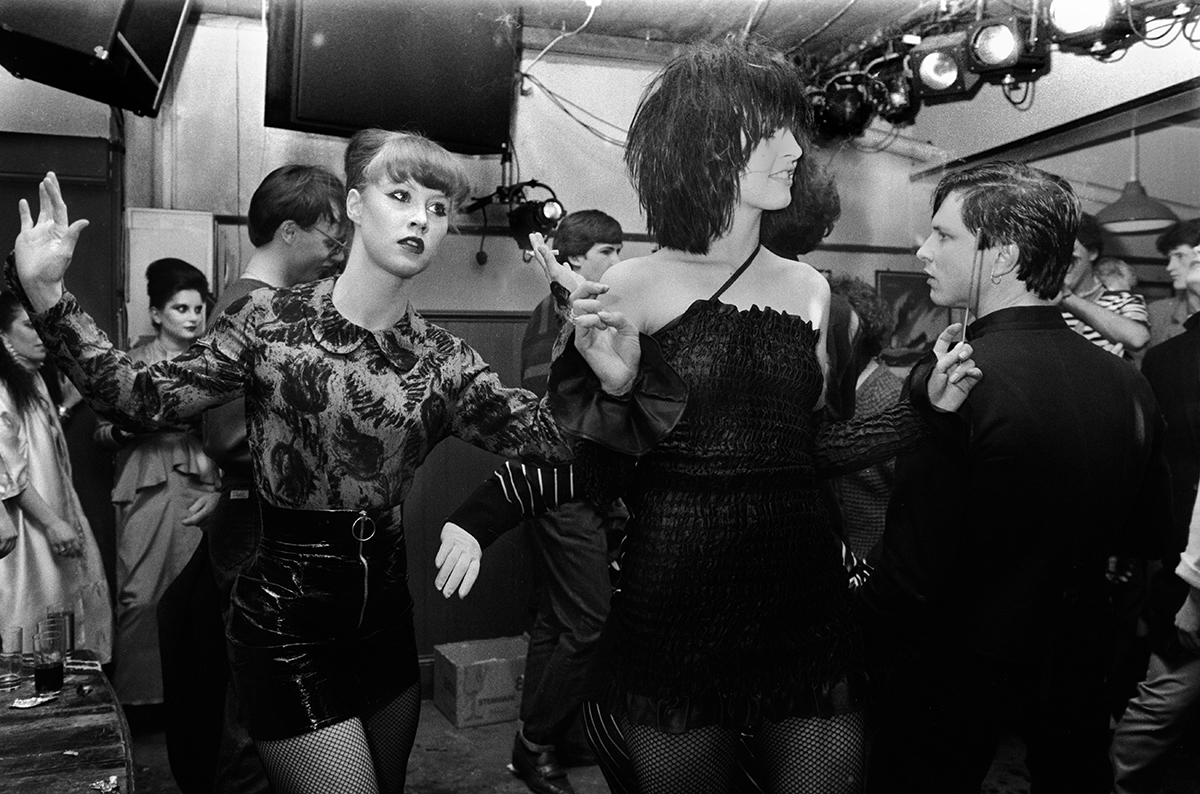
Girl on left is Lorraine from the dance troupe Spoonoch. Girl with black bob hairstyle is Wendy May who was Billy Idol's girlfriend in the band Chelsea. (c) Homer Sykes
Culturally, the New Romantic movement emerged partly as a reaction against the bleakness and austerity of late-1970s Britain. Blitz and related clubs embraced glamour, escapism, fantasy, and artistic experimentation instead. Their influence spread far beyond nightlife, shaping synth-pop music, 1980s fashion, gender expression, magazine imagery, and international club culture. Even David Bowie recognised the significance of the scene, casting Blitz regulars in the video for “Ashes to Ashes,” effectively immortalising the movement within popular culture.
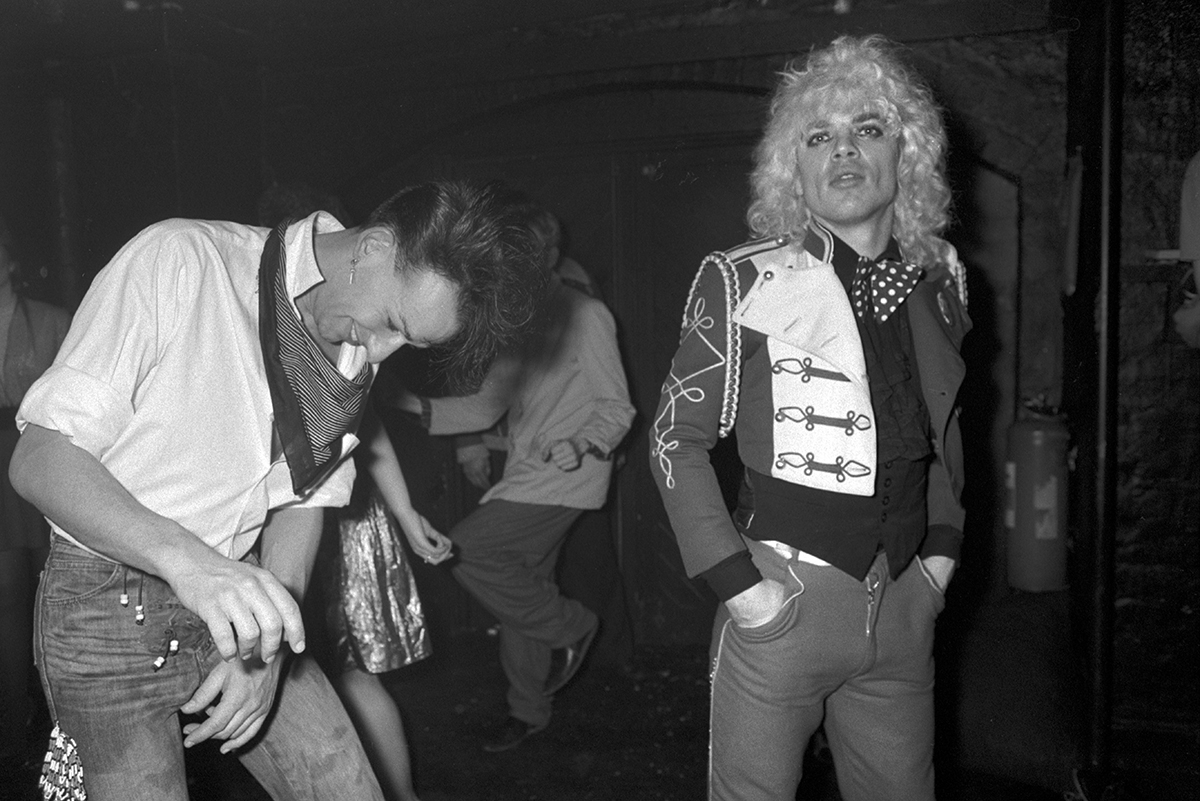
Heaven Nightclub, Charing Cross, London (c) Homer Sykes
Together, Blitz and Heaven transformed nightlife into something far more significant than entertainment alone. These clubs became spaces where fashion, music, sexuality, identity, and performance merged into a new form of cultural expression. They helped redefine what a nightclub could be: not simply a place to dance, but a creative environment where entire identities, aesthetics, and artistic movements could be invented.
Virtual Exhibition Tour - Oriel Colwyn